AI Agents Memory Empowered by Knowledge Graphs
For anyone designing their first agent memory system.
Understand where retrieval ends and memory begins, and how a knowledge graph helps an agent reason.
Read on Leanpub →18 published. Four shelves: how an agent remembers, how to model what it knows, the databases it remembers on, and how architecture turns into business impact. Not all of it needs a cover-to-cover read — the guide below says which books do. Everything is on Leanpub, where the pricing is yours to set.
For anyone designing their first agent memory system.
Understand where retrieval ends and memory begins, and how a knowledge graph helps an agent reason.
Read on Leanpub →For engineers maintaining a graph that changes over time.
Explore the loop of extraction, consolidation and forgetting that keeps agent memory useful.
Read on Leanpub →For architects and engineering leads accountable for outcomes, not output.
See how clear decisions — not more code — are what move the business.
Read on Leanpub →The arguments the rest of the work stands on. Read cover to cover, and expect to come back.
Skim for the idea, then keep at hand as a reference for when the problem is in front of you.
Every book is a node; every subject is a hub. Choose a subject to keep only the books that carry it — or choose a book to read what it is about.
Start here. What memory means for an agent, how it changes over time, and the engineering loop that keeps it honest.
The starting point: why retrieval alone is not memory, and how a knowledge graph gives an agent something it can reason over instead of merely search.
Read on Leanpub →
Agentic memory as a set of cognitive processes rather than a store — extraction, consolidation, and promise graphs for agents that cooperate without a central authority.
Read on Leanpub →
Time as a first-class dimension in agent memory: bi-temporal facts, decay, recency-aware retrieval, and causal ordering across episodic and semantic stores.
Read on Leanpub →
The engineering loop around a graph that keeps learning: what to extract, what to consolidate, what to forget, and how to keep the whole thing honest over time.
Read on Leanpub →
A structured representation of the environment an agent reasons about, and how to build one that supports decisions rather than descriptions.
Read on Leanpub →How to shape what an agent knows so it can reason over it, not just retrieve it.
Elementary facts as the unit of agent knowledge. Attribute-free modelling that a domain expert can read back as sentences — and an agent can reason over without guessing.
Read on Leanpub →
Higher-order structure — edges over edges, hyperedges, reified relations — for agents that must reason about statements, not just facts. Bipartite encodings aligned with HyperGraphRAG.
Read on Leanpub →
Mark Burgess's Semantic Spacetime ontology — NEAR, LEADS-TO, CONTAINS, EXPRESSES — applied to build graphs whose semantics stay consistent under retrieval and reasoning.
Read on Leanpub →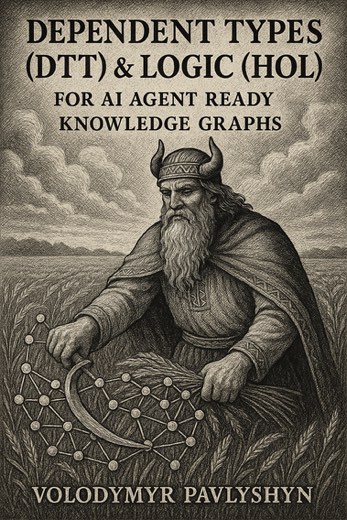
What dependent type theory and higher-order logic offer a knowledge graph: constraints that hold by construction, and models that cannot express nonsense.
Read on Leanpub →Hands-on handbooks for the databases memory runs on. Read the one for your stack; skim the rest.
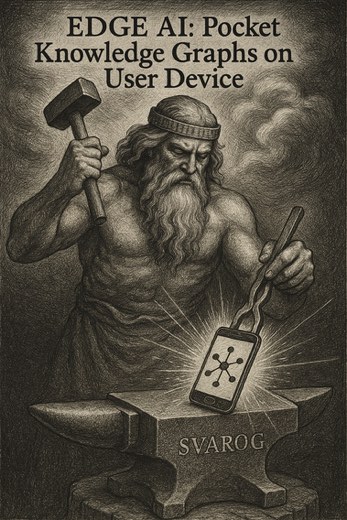
A knowledge graph that fits in a pocket. Local-first, privacy-first memory that ships as a file and runs in-process — no server, no network hop, nothing leaving the device.
Read on Leanpub →
An embedded columnar graph database as the substrate for agent memory: how it stores, how it traverses, and why in-process changes what an agent can afford to ask.
Read on Leanpub →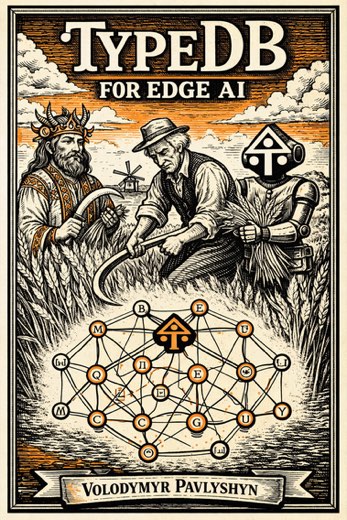
Strongly-typed knowledge graphs as on-device agent memory: PERA modelling, polymorphic entity-relation-attributes, and SHACL-style validation at the edge.
Read on Leanpub →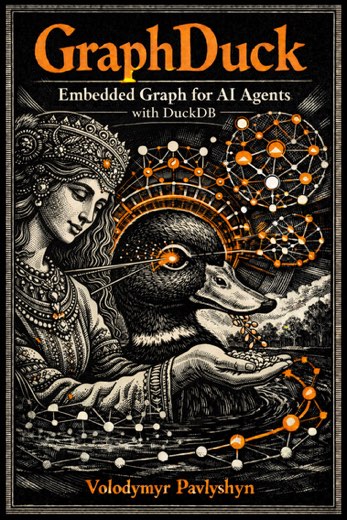
Graph workloads on a columnar analytical engine. What DuckDB gives you for free, where it needs help, and how far an embedded analytical store carries agent memory.
Read on Leanpub →
Cypher past the tutorials — the query patterns that actually come up when a graph is doing an agent’s remembering for it.
Read on Leanpub →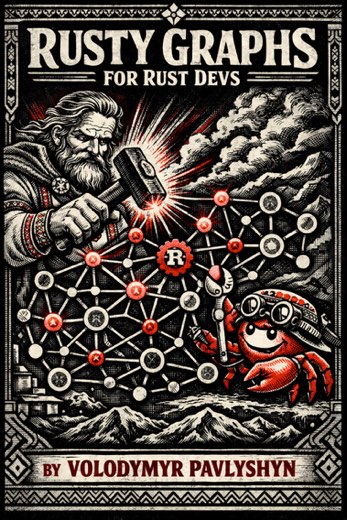
Building agent-ready graph infrastructure in Rust: the crates, the trade-offs, and the parts you still have to write yourself.
Read on Leanpub →How engineering decisions turn into business outcomes: clarity, judgement, and working alongside agents.
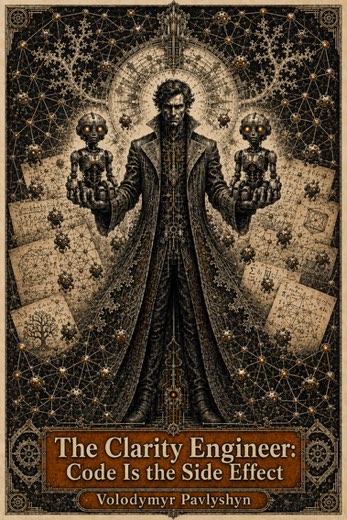
The argument that an engineer’s real output is clarity, and the code is what falls out of it. What changes when you take that seriously.
Read on Leanpub →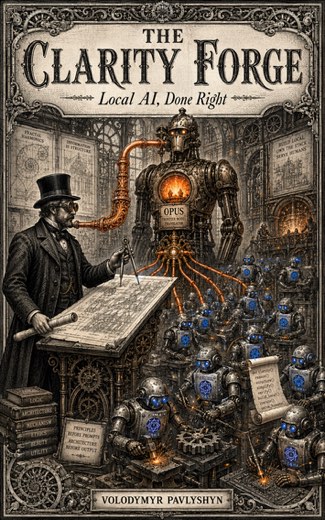
Building a coding agent that runs on your machine and earns its place in the loop — context, memory, and the discipline that keeps it useful past the demo.
Read on Leanpub →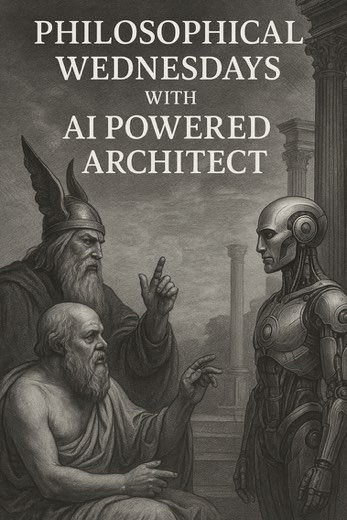
Weekly arguments with a machine about architecture, meaning, and what we are actually doing. Less a manual than a record of thinking out loud.
Read on Leanpub →Prices on Leanpub are variable — you choose what to pay above the minimum, and the book keeps updating after you buy it.